The Science

Why sea moss.

The ocean's most mineral-dense plant, matched to your body's natural pH, translated into a personal lubricant that respects biology.

Chondrus crispus

An ocean plant with a thousand-year resume.

Sea moss (Chondrus crispus) is a red algae that grows on the rocky Atlantic coasts of Ireland, Scotland, and the Caribbean. Irish coastal villagers fed it to children recovering from tuberculosis. Jamaican grandmothers blended it into drinks for vitality and stamina.

Long before we had the nutritional science to explain why, people living next to the ocean already knew: this plant is dense, nourishing, and kind to the body.

Today we have the data. Sea moss carries 92 of the 102 minerals the human body is made of — including iodine, potassium, zinc, magnesium, iron, and selenium.
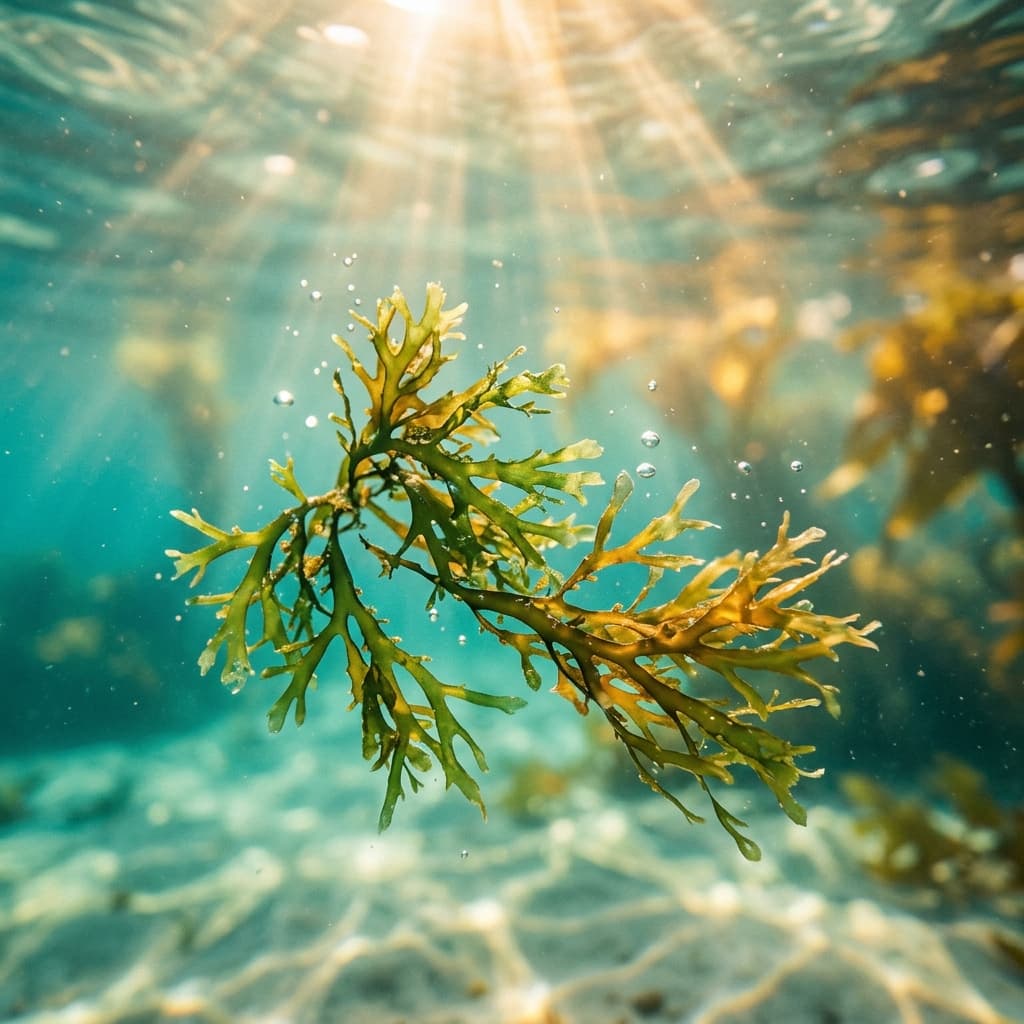
Sea moss macro — red algae suspended in shallow Atlantic water
Atlantic Harvest
Hand-harvested from regulated North Atlantic waters and rinsed four times before extraction.
Mineral Profile
92
of 102
Human-Body Minerals

Sea moss carries 92 of the 102 minerals that make up the human body. No other commonly-cultivated plant source even comes close.

I
Iodine
Zn
Zinc
Mg
Magnesium
K
Potassium
Fe
Iron
Se
Selenium

Mineral density, visualized.

Each filled square represents one of the 92 minerals your body recognizes. The 10 empty squares are what is not present — still one of the most complete natural mineral sources on earth.

Present · 92Not Present · 10
κ-carrageenanHydrating Matrix
The Slip, Explained

Carrageenan — nature's gel, without the synthetics.

Sea moss produces carrageenan, a family of naturally occurring polysaccharides — long chains of sugars that hold water between their links. When extracted gently, it forms a silky, cushioning gel that behaves like biology, not like chemistry.

That is the “slip” people feel with Seaduced. It is not mineral oil, not petrolatum, not dimethicone. It is water-soluble, rinses clean, and does not coat tissue with a residue your body has to process.

Think of it as the ocean's version of a hydrating mesh: it holds moisture exactly where you want it, for as long as you want it there.

pH Matters

Your body lives in a narrow range. Our formula meets it there.

Healthy intimate pH sits between 3.8 and 4.5 — slightly acidic, protective, and easily disrupted. Most mainstream lubricants are alkaline (pH 7+), which can shift the microbiome and cause irritation.

AcidicNeutralAlkaline
Healthy Range
3.8 – 4.5
024678101214
4.2
Seaduced formulation

Centered in the healthy range. Your body recognizes it.

7+
Typical alkaline lube

Shifts pH upward. Can disrupt beneficial flora.

<3.8
Too acidic

Can sting on sensitive tissue. Rare but worth knowing.

From Ocean to Bottle

Four steps. No shortcuts.

01

Source

Hand-harvested Chondrus crispus from regulated Atlantic waters. Traceable to the bay.

02

Clean

Four freshwater rinses. Ocean debris, salt, and sand removed. Nothing left but the plant.

03

Formulate

Blended with aloe, plant-derived hyaluronic, and vitamin E. pH-adjusted to 4.2.

04

Bottle

Filled in small batches, tested for consistency, sealed, and boxed in discreet packaging.

Honesty Clause

What we don't claim.

Seaduced is a personal lubricant designed around clean, plant-based ingredients and intentional pH.

It is not a medical device, not a supplement, not a contraceptive, and not a treatment for any diagnosed condition. It is not intended to prevent, cure, or diagnose disease.

If you are managing a specific health concern — hormonal, vaginal, dermatological, or otherwise — we recommend talking with your healthcare provider before adding any new product to your routine. We care more about you trusting us long-term than about overpromising today.

Seaduced · Naturally Intimate
Further Reading

Sources we stand on.

Three peer-reviewed starting points if you want to go deeper into the biology behind the bottle.

Shop The Result

Science, in a 5 oz bottle.

Plant-based. pH 4.2. Tested, traceable, and made for every body.